Preserving the Parlor's Pictures
May 3, 2013
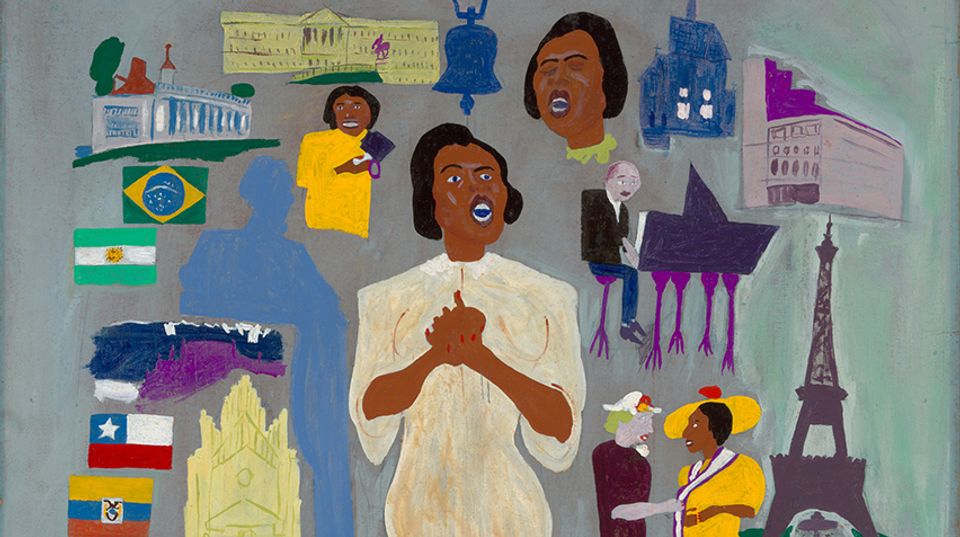
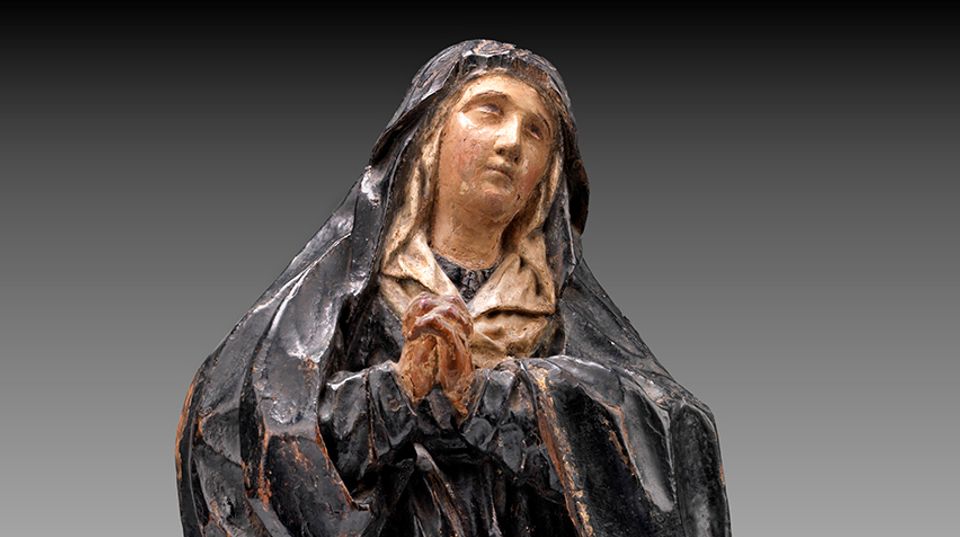
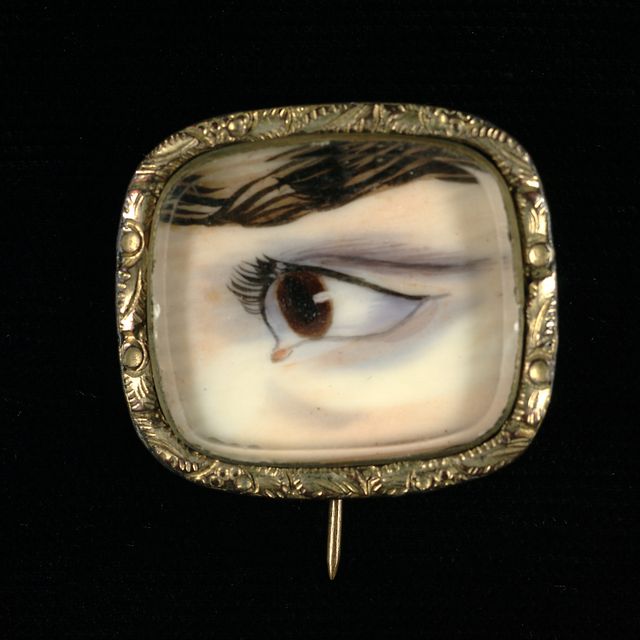
[Three Men and a Woman], Artist unidentified.
Few architectural ideas are able to capture a sense of historical romanticism as readily as the notion of the nineteenth century parlor. Dark wood interiors complimented by the delicate white lace of table doilies, the aroma of cigar smoke passing before a glowing table lamp, and children in evening wear awaiting the dinner bell, such are the details of our popular imagination of this entrancing space. If we could transpose ourselves in time to those elegant rooms and take part in the pageantry and decorum that they showcased, what would we find?
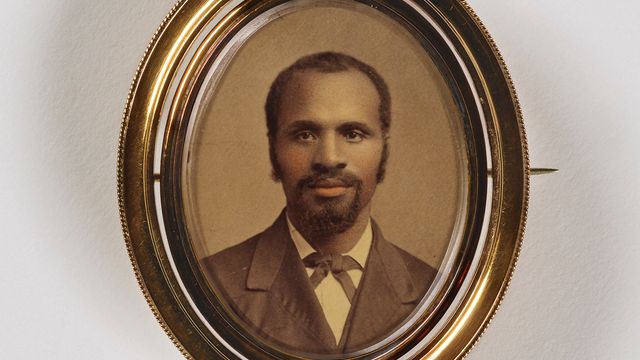
American Art's exhibition, Pictures in the Parlor, provides an opportunity to encounter this bygone era of society and domesticity in its exhibition of decorative images from the mid nineteenth century through the early twentieth century. These pictures take the form of photographs, tintypes, and collages. Depicting the family's aesthetics, status, and history, these artworks reflect the aspirations and sensibilities of their owners. Photographs of family matriarchs, patriarchs, and children are enriched with hand-colored hues, imbuing them with a sense of artistic flare that superseded their material character and bolstered the reputation of their subject.
This show features three different types of media, all of which would have adorned the walls and tables of their sitters' parlors. Twenty-one hand colored photographs of largely anonymous figures allow the viewer to imagine themselves looking at their own family forerunner and daydream of the picture being passed amongst youthful great grandparents in the dark glow of a gaslit room. Accompanying these photographs is a series of nine folios from a Victorian collage album. These "scrapbook houses" would be created by young, middle class girls in the nineteenth century, helping them prepare for future domestic endeavors, such as interior decoration. This would set the stage for the portrayal of their families' values and status.
Twenty-five of the artworks are an early form of photography known as tintypes. Instead of a paper support, tintypes begin as an iron plate, which is covered in a lacquer. In the late 1800s and early part of the new twentieth century, tintypes were intended to be handled. Often, passing these pictures around the parlor resulted in crimped corners. Where these bends occurred, metal was exposed and rust began to spread. In anticipation of this exhibition, Contract Photo Conservator, Rachel Wetzel, added consolidant to areas of exposed metal to prevent the spread of any rust that had formed. She also re-adhered flaking emulsion and paint that had begun to detach from the iron support. Working with a microscope, these consolidation treatments addressed even the smallest areas of concern. In this way, the aesthetics, status, and history, prominently displayed in these families' parlors will continue to be preserved to entice the imagination and popular memory of the American public.
Pictures in the Parlor will be on view until June 30, 2013. Treat the galleries like your own personal parlor and peruse these beautiful artworks with us.
Posted by Chris on May 3, 2013 in American Art Here, Conservation at American Art
Permalink
| Comments (0)
Picture This: Slow Art at American Art
May 1, 2013
Public Programs Coordinator Laurel Fehrenbach, center, leads a discussion with Slow Art participants at American Art
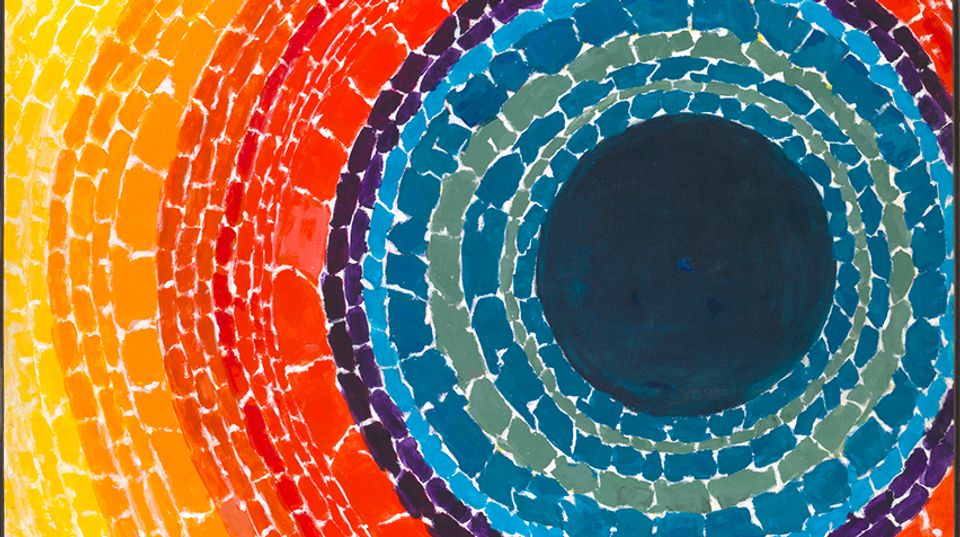
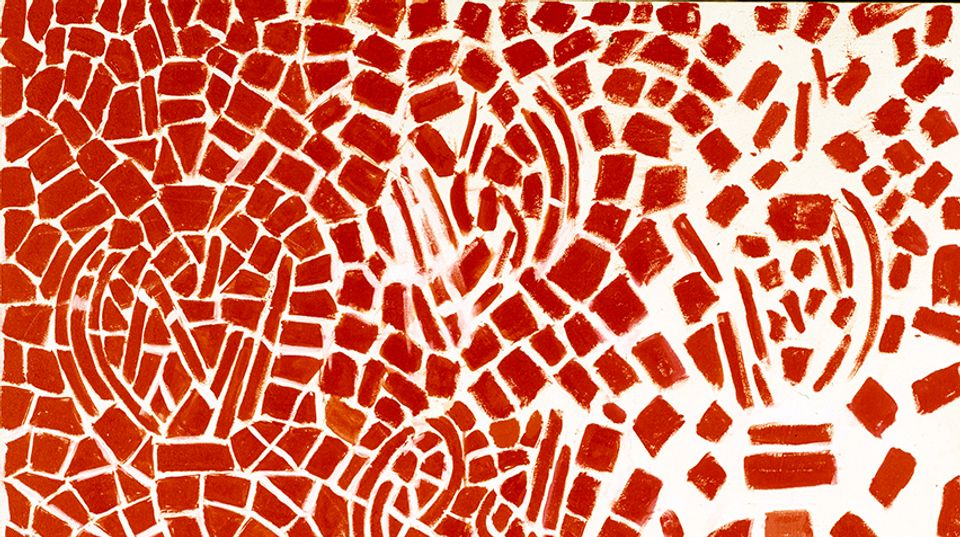
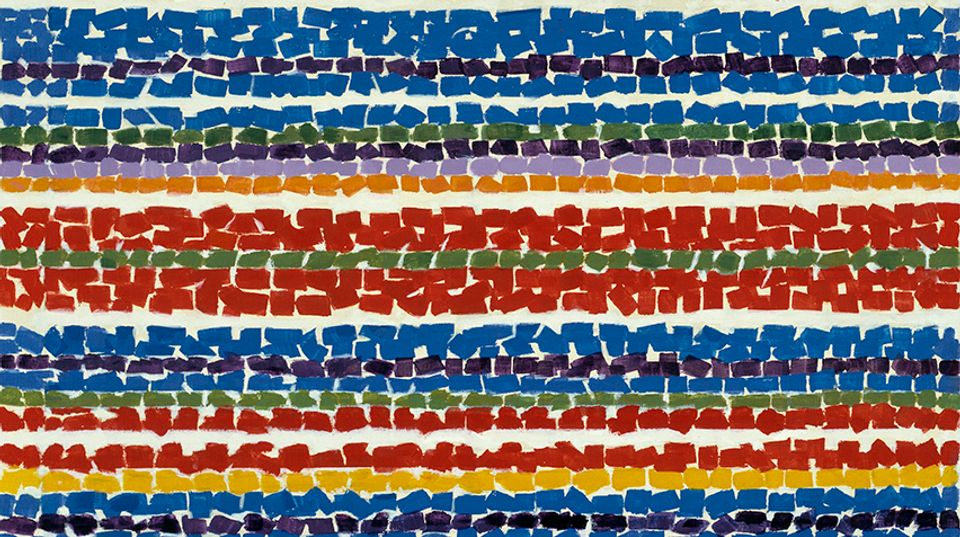
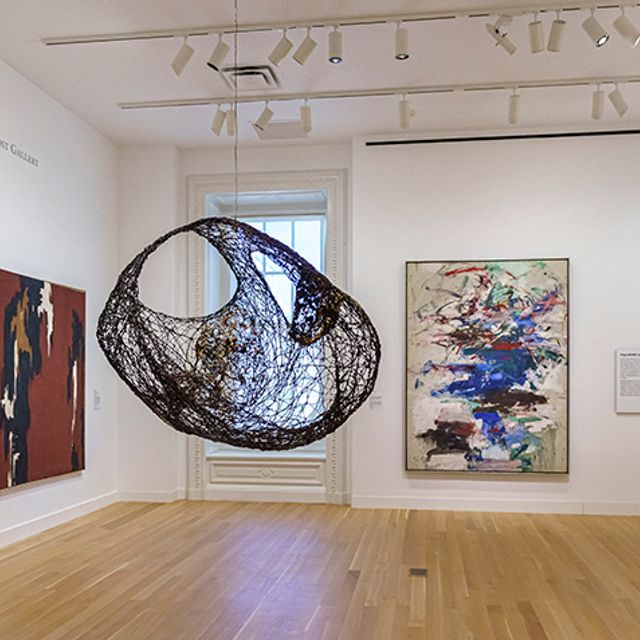
American Art participated in this year's Slow Art Day, one of over 265 museums world-wide. One of the paintings we discussed was Untitled by Sam Francis in the Abstract Expressionist galleries. We talked about the idea of positive and negative space. Is the white center of this piece empty and open? Or does the white fill the void between the colored borders? We couldn’t decide, but half the fun was talking about it!
No need to wait until next year's event. Try this on your own, with another work in our collection. Here are a few questions to get you started:
What do you see?
What grabs your attention?
What do you notice about the material this piece made out of?
What does this piece make you think of?
If you had the opportunity to speak with the artist, what one question would you ask?
How do you think this work relates to the other pieces around it?
Do you like this piece? Why or why not?
Posted by Jeff on May 1, 2013 in American Art Here, Picture This
Permalink
| Comments (0)
The Civil War and American Art: A Confederate View
April 25, 2013
This blog post is part of a monthly Eye Level feature on our exhibition The Civil War and American Art. Curator Eleanor Harvey talks about many of the important intersections between American art and the Civil War. The exhibition runs through April 28, 2013.
Conrad Wise Chapman may be the least well-known painter included in The Civil War and American Art, and not surprisingly he's the artist most visitors have asked me about. His small paintings of the battlements surrounding Charleston Harbor are beautifully composed and painted, answering the artist's need to paint coastal landscapes and the Confederacy's desire for views of the city's fortifications. And therein lies one of the most significant reasons for Conrad's relative obscurity in American art—his wholehearted support for the Confederacy. In large part, Northern artists painted the works that were most widely seen and reviewed during the Civil War, as the New York-based art market hummed along relatively unscathed by the conflict. Across the South, however, the war took a dreadful toll on the fine arts. Blockades impeded the availability of supplies; scarcity of money drained patronage from the art market; and even in Charleston and New Orleans, two of the most vibrant economies in the South, the art market essentially went dormant.
Conrad Wise Chapman defied his family and enlisted when war broke out. Although he was raised in Italy, Conrad considered himself first and always a Virginian. His middle name honored Virginia Governor Henry A. Wise, who became Chapman's commanding officer in the Confederate army.
Chapman was able to take advantage of a rare moment during the war. Stationed in Charleston under the direction of General P. G. T. Beauregard, Chapman was assigned to paint the fortifications Beauregard had labored to rebuild as illustrations for his planned memoir. Between December 1863 and March 1864 Chapman rowed across the harbor sketching the forts.
Conrad Wise Chapman, Fort Sumter, Interior, Sunrise, Dec. 9, 1863, 1863–1863, oil on board, The Museum of the Confederacy, Richmond, Virginia, Photography by Alan Thompson
One of the most poignant and lyrical of Chapman's paintings is Fort Sumter, Interior, Sunrise, Dec. 9 1863. As dawn rises over the scene, groups of men huddle around small fires, the light reflected in pools of standing water inside the shattered battlements. Chapman had been raised in Rome, and his vision of Sumter is steeped in childhood memories of the Coliseum, an emblem of the fallen empire. Chapman imbues his scene with a similarly grave pathos, as though portraying a similarly embattled civilization. Atop one of the damaged walls, a Confederate flag flies proudly in the morning light, a sentry perched close by. That flag was the centerpiece of another painting, titled The Flag of Sumter, Oct 20 1863, in which the banner waves defiantly as the Union navy anchors outside the harbor. During 1863 Federal forces tried without success to penetrate Charleston Harbor. Partially in frustration, the Union ships daily fired upon Sumter and its large Confederate flag, a lingering reminder of the insult to the American flag that Major Robert Anderson had lowered in surrender in April 1861. Overnight the Confederate soldiers would repair the flagpole and run up the colors each morning. Chapman painted this symbolic gesture of stubborn pride in the Confederate cause.
Chapman ended up painting thirty-one views of Charleston Harbor, nine of which are included in this exhibition. With the surrender of the Confederacy, Chapman had no one to buy the works or publish them. (Beauregard's memoir never came to fruition.) As late as 1898 the entire suite of paintings went on view at the Union League Club in New York, where they attracted attention, but no buyers. Governor Wise's son John noted bitterly—and quite possibly correctly—that this was due to the prominence of the Confederate flag in many of the paintings. The following year the Chapman family finally found a sympathetic buyer and sold the set to Richmond native Granville Valentine. Tucked away in his private collection and eventually donated to The Museum of the Confederacy in Richmond, Virginia, Chapman's paintings remained mostly unknown.
Chapman's career highlights the extreme difficulty of sustaining an artistic career in the war-torn South. Chapman's works were evidence of a gamble that, should the South prevail, victory might have positioned him to be an artist of some repute. Instead he struggled to obtain the commissions necessary to sustain his career and his family. Conrad's experiences provide an illuminating case of how historical circumstance can trump aesthetic merit. His small, lyrical views of Charleston provide an important insight into the power of art both to document and transcend the conflict.
Posted by Jeff on April 25, 2013 in American Art Here
Permalink
| Comments (1)
Slow Art Day: Leaning Towards a Different Way of Looking at and Loving Art
April 23, 2013
On Saturday, April 27, American Art will be one of the over 240 museums around the world that will be hosting Slow Art Day. The event is free to the public. Jeff Gates took some time to talk with Slow Art Day's founder, Phil Terry, about the genesis of this event.
Joan Mitchell's SunflowerIII will be one of the artworks we will be looking at on Slow Art Day.
Eye Level: What is Slow Art and how did you come up with the idea for Slow Art Day?
Phil Terry: Slow Art Day is the annual event in more than 240 museums and galleries around the world with a simple mission: help more people discover the joy of looking at and loving art. This year participants show up on Saturday, April 27 at one of the participating museums and then look slowly, 5-10 minutes, at each of five pre-assigned works of art. Why focus on slow? When we look slowly at art we make discoveries. One of the most important discoveries we make is that we can see and experience art on our own. And that's exciting. It unlocks passion and creativity and helps to create more art fans. At Slow Art Day, we like to say that we are in the business of making more art fans: by helping people discover their own ability to look at and love art.
I came up with the idea while looking at Hans Hoffman's Fantasia for an hour during the 2008 Action/Abstraction exhibition at the Jewish Museum in New York. It was such a different experience to look at that one artwork for an hour that I decided that slow looking was the "secret" that would transform the visitor experience for the typical museumgoer like myself who was not an expert and didn't have the training in how to look.
EL: You don't work in a museum, so how have you gotten so many museums to participate in this yearly event?
PT: While you're right that I do not have a background in museum management, I do have a background in organizing online global movements. I did it at Harvard Business School when I built a global MBA conference on technology and the Internet in the 1990s. And I have gone on to do that for many cultural programs.
I'll add, however, the most important reason Slow Art Day has grown is because we've got a lot of help from a lot of people. You were an early adviser, for example. We also have an amazingly dedicated team of volunteers, including Caroline Wingate, who registers hosts from all over the world and gets them setup, and Dana Lemmer, who has built a college internship program as well as our global outreach database. Alie Cline, a student from the University of Texas, has done an amazing job building our Tumblr website to over 13,000 followers and now manages our whole social media team. Maggie Freeman, a student from Mills College, has been working to create our host support and best practice teams. In all, we also have more than 15 college interns (and we have more openings available!) and they have done a great job organizing and managing outreach and our social media channels.
Finally, I'll note that museums and galleries really love this simple concept and we make it easy (and free) for them to sign-up and host. There is growing awareness among museum directors, curators, and educators that Slow Art Day can help them improve their visitors' experience. After we started it in 2009 with 16 museums and galleries (including the Smithsonian American Art Museum), word of mouth really took off and it's grown from there.
EL: Yes, I was immediately attracted to Slow Art. As a museum professional, I'm surrounded by wonderful art and I work with it every day. However, I don't often get a chance to sit quietly and look. It was a pleasure I didn't know I was missing!
Phil, you're sort of a "Renaissance Man," an "amateur" in the original meaning of the word (amateur, meaning "lover of"). Tell us about your other passions.
PT: In 2005 I started the Reading Odyssey, a nonprofit dedicated to lifelong learning. Reading Odyssey has run many programs around the world with leading scholars including the Darwin 150th Anniversary program (commemorating the 150th anniversary of the publication of On the Origin of Species) and Marathon2500, reflecting on the 2,500 year anniversary of the Battle of Marathon. Both these programs and others have involved thousands of people at locations all over the world and lots of social media support and activism. My "day job" is running Creative Good, an Internet consulting firm focused on customer experience.
The common philosophical thread among all these projects is that I really am interested in creating environments where people learn they are capable of change and development, whether they are reading a classic in the Reading Odyssey, looking at great art in Slow Art Day, or listening to their customers or their peers at Creative Good. I'm interested in that moment when people realize they can have a more active, considered experience leading a company, looking at art, or reading a book. I also am longtime yoga practitioner, which has influenced me in a myriad of ways. And I love theater and film—and I quite enjoy watching really good movies again and again (I suppose you could say that I'm like a kid that way).
EL: What artwork from American Art's collection would you like to sit in front of and take in nice and slow?
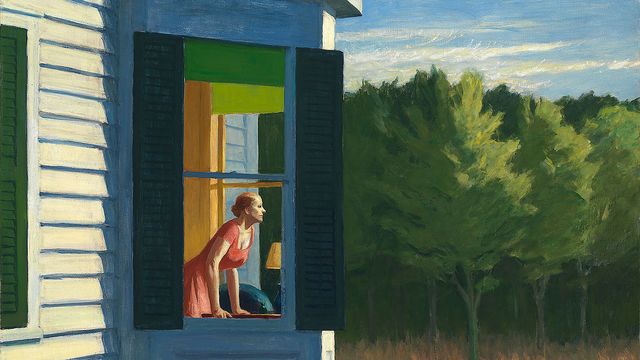
PT: Edward Hopper's Cape Cod Morning is such a beautiful painting. I love the light. I love the woman looking out the window. I'd love to really sit and take in the colors and emotions of this painting and consider the question of what exactly it is that woman is looking at. In contemporary parlance, she's leaning in. What is she leaning towards?
Posted by Jeff on April 23, 2013 in American Art Everywhere, American Art Here, Five Question Interviews, Post It
Permalink
| Comments (2)
Jazz Appreciation Month: A Tribute to Dave Brubeck
April 19, 2013
Brubeck Institute's Jazz Quintet
In celebration of Jazz Appreciation Month, the Smithsonian American Art Museum will present a concert in tribute of the late Dave Brubeck by the Brubeck Institute's Jazz Quintet (BIJQ) from the University of the Pacific. Laurel Fehrenbach, public programs coordinator at American Art, spoke with Simon Rowe, Executive Director of the Institute, and pianist Paul Bloom on the legacy of this great jazz legend. Our tribute, Dave Brubeck: Across Time, will take place Monday, April 22, 2013 at 6:30 p.m. A special pre-concert discussion about Brubeck's music and his impact in the world of jazz starts at 5 p.m.
Eye Level: We are so looking forward to celebrating Dave Brubeck during Jazz Appreciation Month. Can you tell us a bit about the Brubeck Institute's history and Dave's involvement?
Simon Rowe: The Brubeck Institute was established in 2000 to build on Dave Brubeck's lifelong dedication to music, creativity, education, and the advancement of important social issues including civil rights, international relations, environmental concerns and social justice. Both Dave and Iola Brubeck and the Brubeck family have been closely involved in the growth of the Institute, performing at and attending annual Brubeck Festivals and supporting the outreach and education programs.
EL: What has Dave meant to you personally, as a musician and a mentor, as well as to the members of this year's BIJQ band?SR: His long career exemplifies the journey of a fearless spirit who embraced many styles of music over a 70 year career and led one of the most famous groups in the history of Jazz music(The Dave Brubeck Quartet). He was a bold spokesman for civil rights and used his position to advocate for positive change with his wife and partner Iola.
Paul Bloom: Dave is truly a role model for all of us. Not only is his music amazing, but he's one of the only a few really selfless musicians. When Dave performed or composed, he was never just doing so for money or for his own personal satisfaction, the way the majority of musicians do. Instead, he used his music as an extremely powerful tool to impact society in a positive way, whether that meant cancelling tour stops at a personal loss when the venues told him they were segregated or taking his band on a tour behind the Iron Curtain during Cold War. His incredible work in using music to benefit others is a gigantic inspiration for all of us to follow in his footsteps.
EL: How will you keep Dave's spirit and legacy alive for these students, now that he has passed?
SR: The first and most obvious way for our students to understand Dave Brubeck is to learn and to play his music. The next is to study his life and career to understand his impact on the world through jazz and the arts.
PB: The best way we can keeps Dave's legacy alive is to continue where he left off, and do the best we can to use the music we love to cause positive change in society. As students, we try to do this by teaching music (especially to those who ordinarily wouldn't have access to the opportunity to learn) playing Dave's music and telling his story to as many people as we can, performing, and setting up benefits and fundraisers for causes we believe in and think we can impact.
EL: Does the BIJQ compose their own music? Where do their influences come from?
PB: Yes. Most of the music we play in the BIJQ is composed by one or more of the members of the band. As a composer, my biggest influence is almost always the group of people that I'm writing for, so in the case of the BIJQ, I'm very influenced by Adam, Rane, Malachi, and Tom. We've all played together so much, and know each other so well that I often come up with songs because I can hear them playing the parts of the songs in my head, even before I or anyone else has actually played those parts. Aside from the guys in the group though, a few of my influences in music right now are Duke Ellington, The Punch Brothers, Debussy, Dr. Seuss, Brad Mehldau, Antonio Carlos Jobim, Ahmad Jamal, Becca Stevens, James Blake, Julian Lage, & The Bad Plus.
EL: As the relatively new leader of the Brubeck Institute, what is your vision for its future? Where do you see it going and what impact would you like it to have on the music world?
SR: Our hope for the institute is that we can continue the impact society through the arts, continuing the life's work of Dave and Iola Brubeck in education, community engagement and as a catalyst for social change.
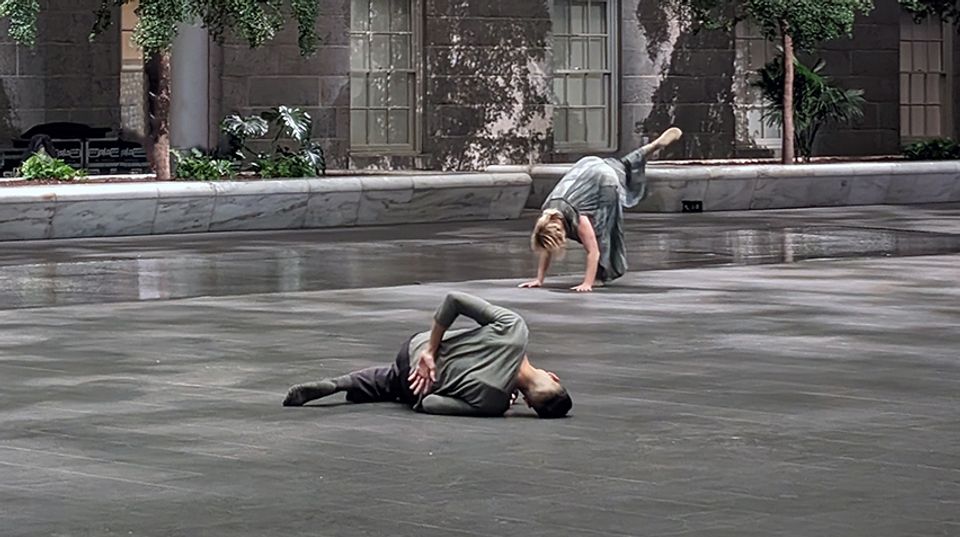
If you love jazz, visit the museum every third Thursday from 5-8 p.m. for American Art's free Take 5! jazz concerts series in the museum's Kogod Courtyard.
Posted by Jeff on April 19, 2013 in Five Question Interviews, Post It
Permalink
| Comments (1)

Recent Comments